Skid Steer or Compact Track Loader: Undercarriage Essentials
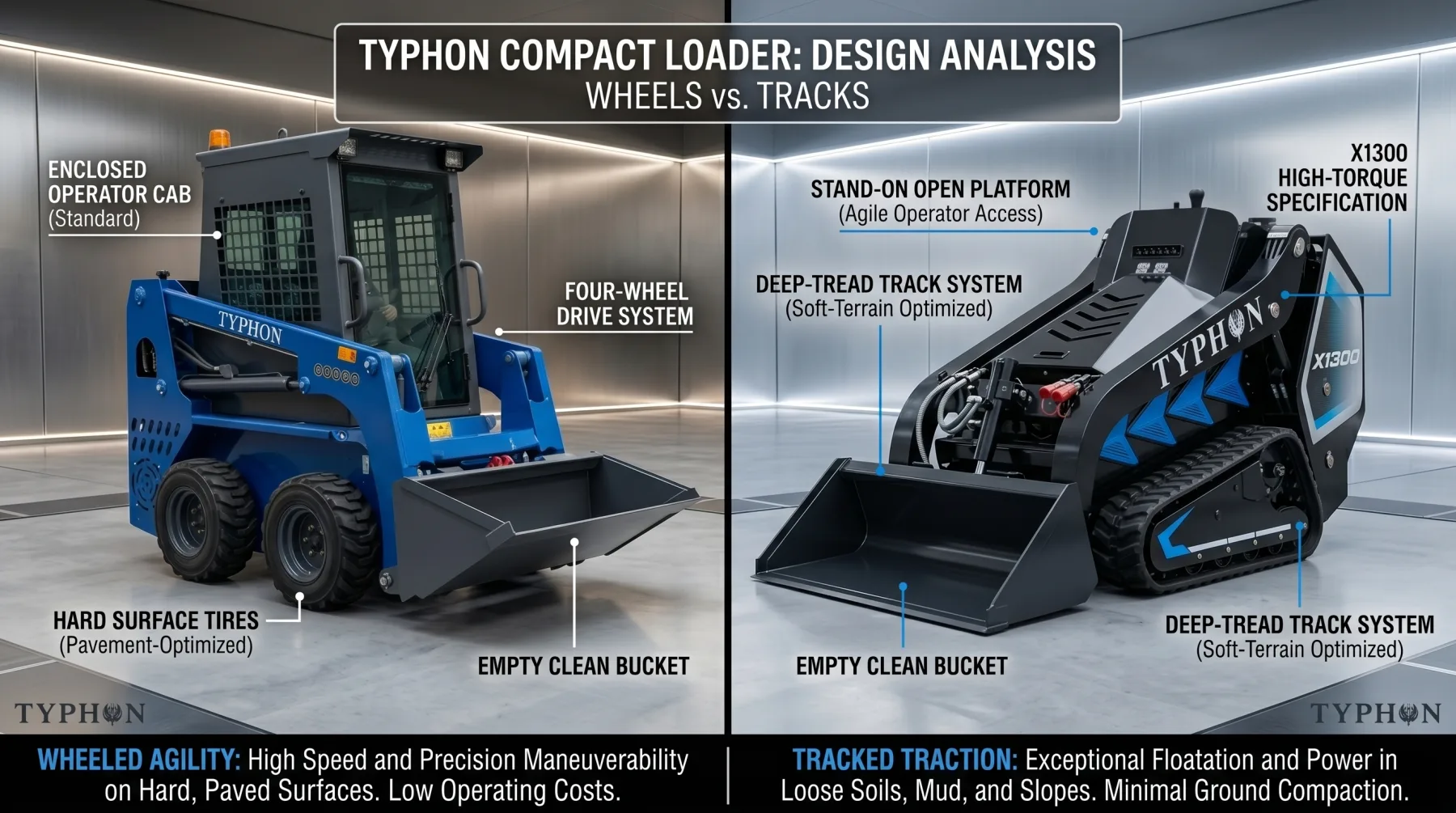
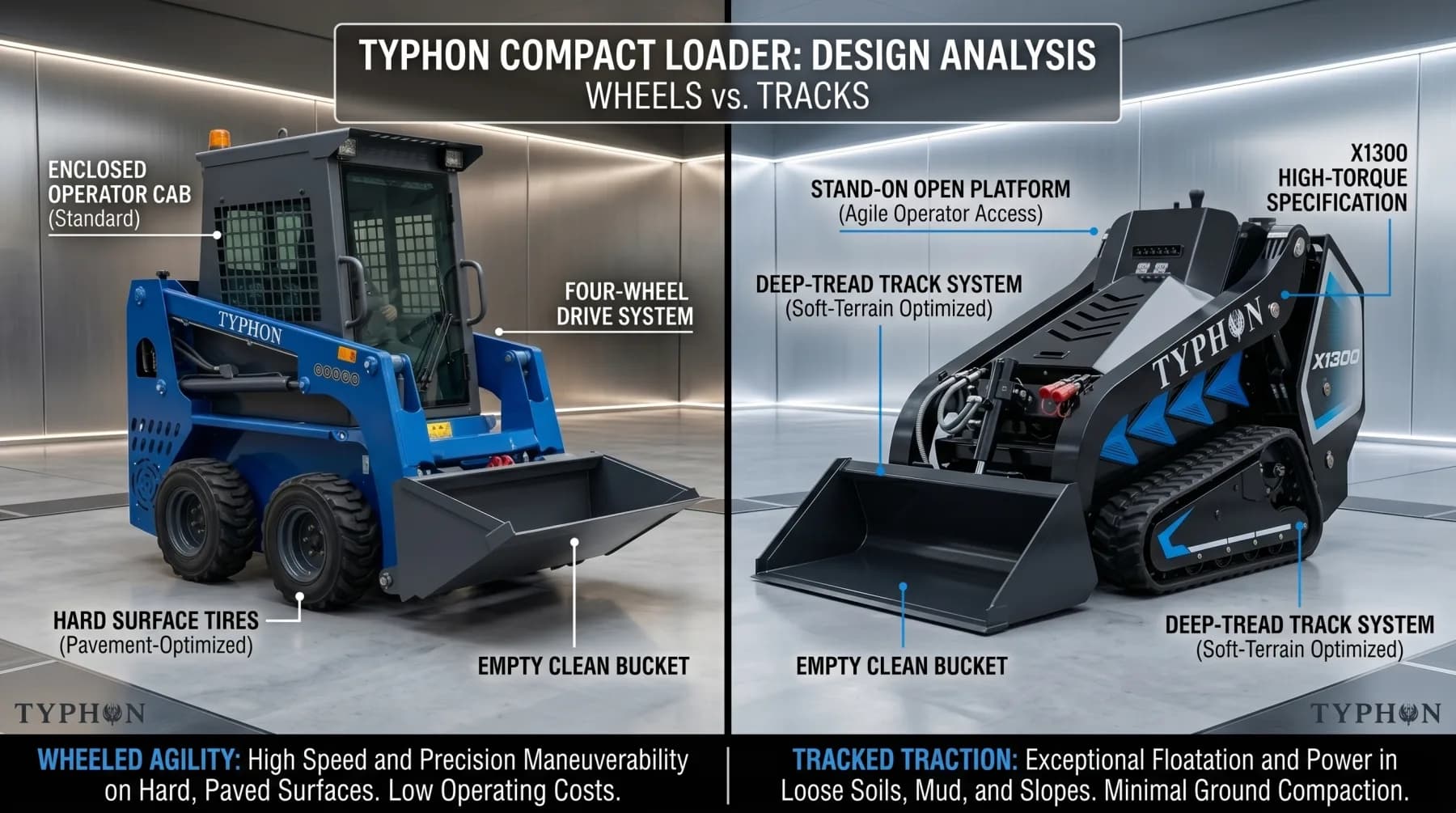
The choice between a skid steer and a compact track loader often comes down to one major decision: what is underneath the machine.
Choosing between wheels and tracks affects where you can work, how fast you can move, how much you spend on maintenance, and how well the machine performs under load. If you choose the right undercarriage, the machine becomes a strong productivity tool. If you choose the wrong one, you may spend every job fighting the ground instead of getting work done.
The truth is simple: there is no universal winner.
A wheeled skid steer performs better in conditions where a compact track loader may struggle, while a compact track loader performs better in places where wheels can lose traction or sink. The best choice depends on your terrain, work style, maintenance budget, and the surfaces your machine crosses every day.
By understanding the difference between wheels and tracks, you can choose equipment that works with your jobsite instead of against it.
Need help choosing the right loader for your work? Request a quote or Visit TYPHON.
1. Consider Your Surface Type
The ground you work on is the first and most important factor when choosing between a skid steer and a compact track loader.
Each undercarriage is built for a different type of surface. The surface under your machine usually gives you the clearest answer.
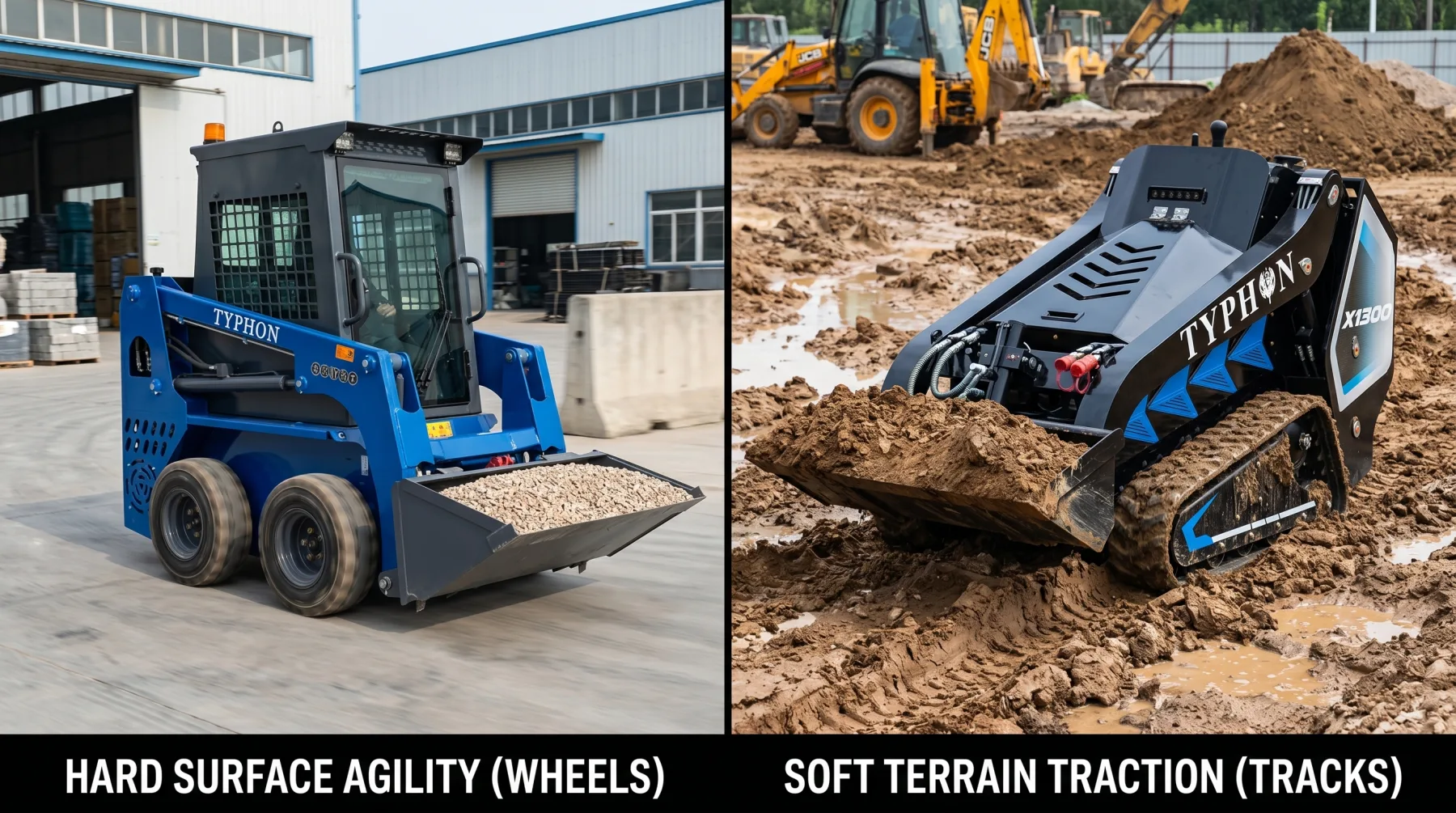
Wheeled skid steers are best on hard, flat ground. They perform well on concrete, asphalt, paved lots, warehouse floors, and other firm surfaces. Wheels roll cleanly, move quickly, and are easier to manage on finished pavement.
For indoor work, paved lots, roadwork support, and hard-surface jobsites, a wheeled skid steer is usually the better fit.
Compact track loaders are better on soft ground. Rubber tracks spread the machine’s weight and grip into mud, loose gravel, sand, soft dirt, and uneven ground. When the site becomes wet, loose, or unstable, a compact track loader can keep working while a wheeled machine may spin or sink.
Before choosing, look at where your machine will spend most of its time.
If most of your work is on pavement, concrete, or firm ground, wheels may be the smarter choice. If your work often happens in dirt, mud, gravel, soft soil, or changing weather conditions, tracks may give you better performance.
Weather also matters. In areas with long wet seasons, a compact track loader can help you stay productive when wheels may struggle. On paved or sensitive surfaces, however, a wheeled skid steer may leave a cleaner footprint and avoid scuffing caused by aggressive track patterns.
The right undercarriage starts with the ground under your machine.
2. Compare Maneuverability and Speed
How a machine moves around the jobsite affects your daily efficiency.
Skid steers are usually faster and more agile on firm surfaces. A wheeled skid steer can travel quickly, pivot sharply, and reposition easily in tight areas. This makes it useful for repetitive loading, cleanup work, material handling, and fast movement across paved or compacted surfaces.
When speed matters and the ground is firm, a wheeled skid steer has a clear advantage.
Compact track loaders trade some speed for better stability and ride comfort. Tracks are generally slower, but they provide a smoother ride over rough, uneven, or bumpy ground. The tracks help bridge dips and bumps that would shake a wheeled machine.
That smoother ride can reduce operator fatigue during long workdays and help keep work more controlled on uneven terrain.
You should match the machine to your work pace. If your job involves many fast trips across flat ground, a wheeled skid steer may be more efficient. If your work involves long hours on rough dirt, slopes, loose soil, or uneven land, a compact track loader may be more comfortable and productive.
Turning surface is another important detail. Sharp pivots are quick on pavement, but on soft ground they can tear up the surface or cause extra wear. Compact track loaders are more stable, but operators still need to avoid unnecessary aggressive turning to protect the tracks and undercarriage.
Choose speed and agility for hard surfaces. Choose stability and smooth operation for rough ground.
3. Look at Operating and Maintenance Costs
Performance matters, but cost matters too.
Over the life of the machine, the difference between wheels and tracks can become significant. In most cases, a wheeled skid steer costs less to own and maintain.
Wheeled skid steers use standard tires, which are usually cheaper and easier to replace than rubber tracks. When a tire wears out or gets damaged, replacement is straightforward. This lower cost of ownership makes a skid steer attractive for first-time buyers, budget-conscious businesses, and jobsites with hard surfaces.
Compact track loaders usually cost more to operate over time.
The rubber tracks are more expensive than tires, and they wear down with use. The undercarriage also includes parts like rollers, idlers, and sprockets, which add more maintenance cost as they wear.
This does not mean a compact track loader is a bad investment. It means you should plan for those costs from the beginning.
If a compact track loader allows you to work through mud, soft ground, wet weather, and rough terrain, it may earn back its higher cost through better productivity. A machine that keeps working when other machines stop can save time, reduce delays, and help complete more jobs.
To control costs, keep tracks clean, avoid unnecessary work on abrasive surfaces, and inspect the undercarriage regularly. Mud, rocks, and debris packed inside the tracks can speed up wear and damage components.
If your work is mostly on hard ground and you want lower operating costs, a skid steer may be the better choice. If your jobs demand traction and flotation on difficult terrain, a compact track loader may justify the higher cost.
4. Think About Flotation and Ground Pressure
Ground pressure decides whether a machine floats over soft ground or sinks into it.
This is where compact track loaders have a major advantage.
A wheeled skid steer puts its weight on four small contact points. On firm ground, that works well. But on soft dirt, grass, mud, or loose soil, that concentrated weight can cause the tires to sink, dig ruts, and damage the surface.
Once the wheels sink, the machine may lose traction and productivity quickly.
A compact track loader spreads its weight across the full length of both tracks. This lowers ground pressure and helps the machine float over soft or muddy soil. Instead of digging deep into the ground, the tracks distribute the weight over a larger area.
This makes compact track loaders especially useful for landscaping, grading, site preparation, field work, and jobs where surface damage matters.
Tracks can also help protect finished lawns, soft fields, and sensitive ground. On jobs where you are responsible for repairing ruts or surface damage, a compact track loader can reduce cleanup costs and protect the finished result.
Wet conditions are another reason to consider tracks. After rain, soft ground can stop a wheeled machine from working efficiently. A compact track loader is more likely to continue working because of its lower ground pressure and better traction.
If surface protection and flotation matter, tracks are usually the stronger choice.
5. Evaluate Stability and Pushing Power
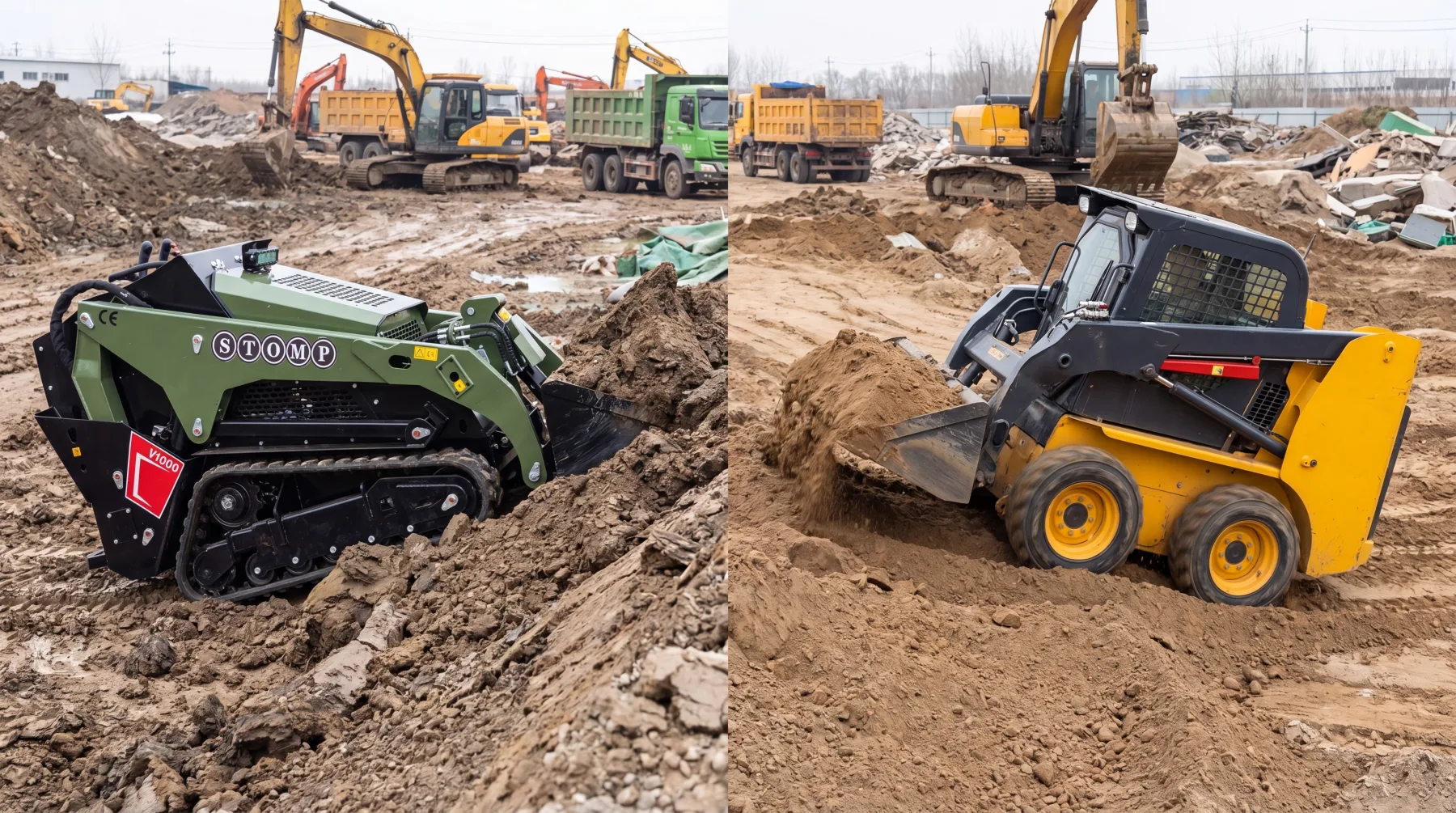
When the work gets heavy, traction and stability become extremely important.
Compact track loaders usually provide better stability because the tracks keep more surface area in contact with the ground. This helps the machine stay planted on slopes, rough terrain, and loose material.
That stable base also improves pushing and lifting performance.
When you are grading, dozing, pushing material, or driving a bucket into a pile, tracks help transfer more of the machine’s power into the ground. Instead of spinning, the machine grips and pushes forward.
A wheeled skid steer can still perform well on firm ground, but it has limits. With only four contact points, wheels are more likely to spin when pushing heavy material through loose dirt, mud, or gravel.
For heavy earthmoving, grading, landscaping, and site preparation, a compact track loader often provides better control and stronger traction.
Slope work is another area where stability matters. A track loader’s wider ground contact can give operators more confidence on inclines and uneven areas. Operators should still follow safe operating practices, but the planted feel of a track loader is a major benefit.
That said, a wheeled skid steer still has its place. For light-duty work, fast cleanup, material movement, and hard-surface operation, wheels remain highly useful.
The right choice depends on whether your work needs raw pushing power or fast movement on finished ground.
Conclusion
Choosing between a skid steer and a compact track loader comes down to your real daily work.
A wheeled skid steer is a strong choice for hard, flat surfaces. It moves faster, turns sharply, costs less to maintain, and works well on pavement, concrete, and compacted ground.
A compact track loader is built for difficult terrain. It provides better traction, lower ground pressure, smoother operation on rough surfaces, and stronger stability for heavy pushing, grading, and soft-ground work.
Neither machine is better in every situation.
The best machine is the one that matches your surface, your workload, your weather conditions, and your budget. When you choose the right undercarriage, your loader becomes more than just equipment. It becomes a dependable tool that keeps your work moving and helps your business stay productive.
Before you buy, study your jobsites honestly. Think about the ground you work on most, the materials you move, and the maintenance costs you are prepared to manage.
Choose wheels when speed, pavement performance, and lower cost matter most. Choose tracks when traction, flotation, stability, and soft-ground performance matter most.
For skid steers, compact track loaders, and equipment support, Request a quote or Visit TYPHON.