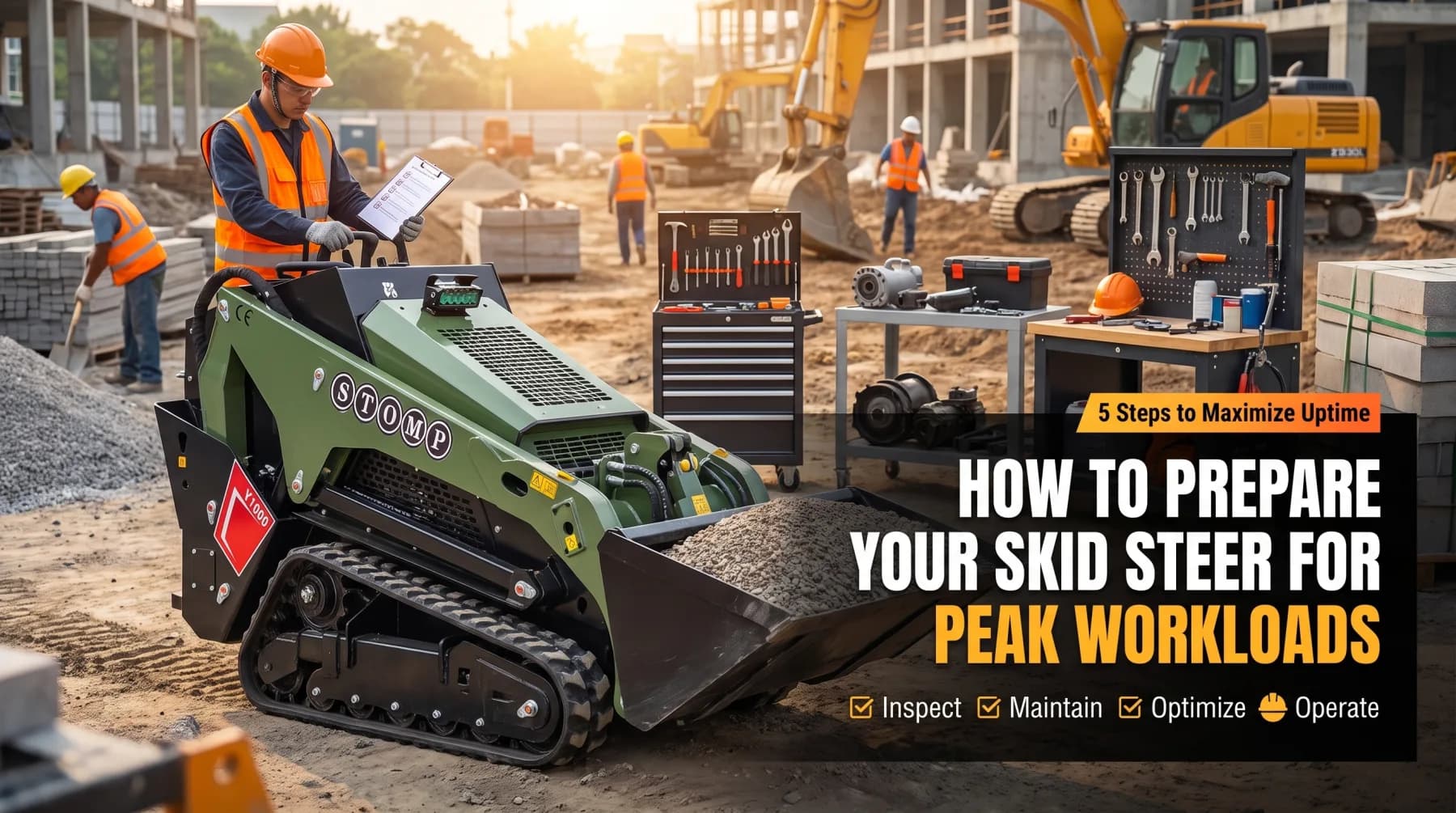
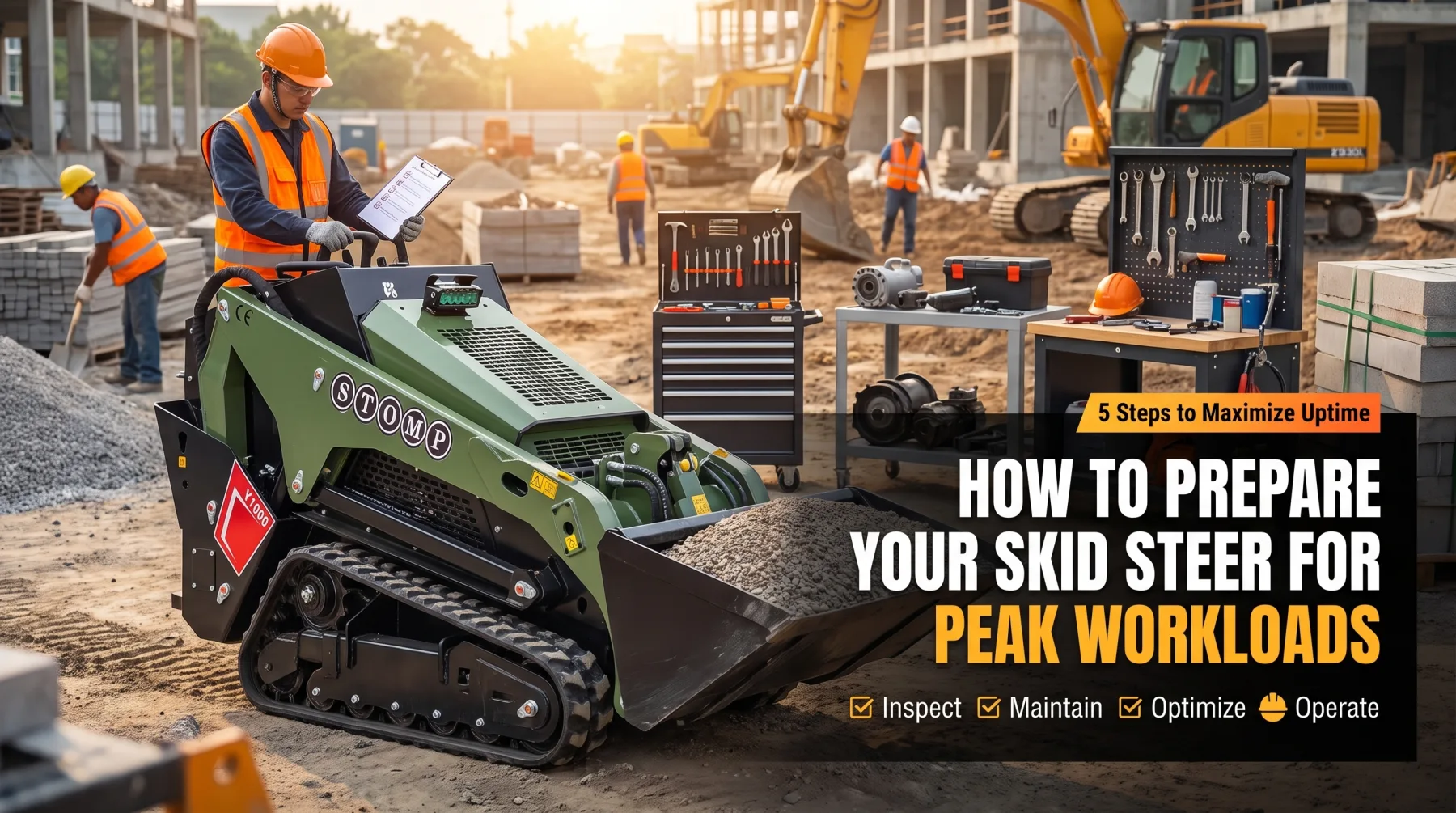
Peak season pushes your skid steer harder than any other stretch of the year. Longer hours, heavier loads, and back-to-back jobs leave little room for breakdowns, and a machine that fails at the wrong moment can throw an entire schedule off course.
The good news is that most peak-season problems are preventable with the right preparation. When you get your skid steer ready before the busy stretch begins, you protect your uptime, your budget, and your reputation for finishing jobs on time.
This guide walks you through five practical ways to prepare your machine for demanding workloads: inspecting key components, optimizing for efficiency, preventing common problems, training your operators, and building a maintenance schedule that holds up under continuous use.
Request a quote or Visit TYPHON.
Inspect and Maintain Key Components Before Heavy Use
Before you ask your skid steer to work through a demanding season, you need to know it can handle the load. A thorough inspection of the machine's key components is the single best way to catch small issues before they become expensive failures on a busy job site.
Heavy use magnifies every weakness, so a worn hose or a low fluid level that seems minor today can bring the machine to a stop when you can least afford it. Starting the season with a healthy, well-checked machine sets the tone for reliable performance all the way through.
Focus your inspection on the components that carry the heaviest burden during peak workloads:
- Fluids: Check engine oil, coolant, and hydraulic fluid levels, and top off or replace anything that is low, dirty, or past its service interval.
- Filters: Inspect and replace air, fuel, and hydraulic filters so contaminants stay out of critical systems.
- Hydraulic system: Look over hoses, fittings, and cylinders for leaks, cracks, or soft spots that signal wear.
- Tires or tracks: Confirm proper inflation, even wear, and adequate tread to keep the machine stable under load.
- Attachments: Examine couplers, pins, and mounting points for damage, and grease them according to the manual.
Once you have worked through these areas, address every issue you find rather than deferring it to a slower week that may never come during peak season. A leaking hydraulic line or a clogged filter left unchecked only gets worse under sustained heavy use, and the cost of a mid-job repair almost always exceeds the cost of fixing the problem in the shop.
By committing to a complete pre-season inspection and following through on the repairs, you give your skid steer the foundation it needs to run reliably when the pressure is highest.
Optimize Your Skid Steer for Maximum Efficiency
A well-maintained machine is only part of the equation. To truly get the most out of your skid steer during peak workloads, you need to optimize how it runs.
Efficiency directly affects your bottom line because a machine that works smarter burns less fuel, endures less stress, and finishes more work in the same number of hours. When every shift counts, small gains in efficiency add up quickly across a busy season.
The foundation of efficient operation is matching the right attachment to each task. Using an undersized bucket or the wrong tool forces the machine to make extra passes and work harder than necessary, which wastes both time and fuel.
Choose attachments sized correctly for the job in front of you, and take advantage of a quick-attach system to switch between tasks without losing momentum. Operating settings matter just as much. Running the engine at the appropriate RPM for the task, avoiding unnecessary idling, and using the correct hydraulic flow for each attachment all reduce strain and keep fuel consumption in check.
Consistent maintenance practices tie the efficiency picture together. A clean air filter helps the engine breathe and burn fuel cleanly, properly inflated tires reduce rolling resistance, and well-lubricated joints let the machine move without fighting friction.
Each of these habits sounds minor on its own, but together they keep the skid steer running smoothly under the heavy demands of peak season. When you combine the right attachments with smart operating settings and disciplined upkeep, you get a machine that produces more while wearing down less, protecting both your productivity and your long-term investment in the equipment.
Explore skid steer equipment or request a quote.
Prevent Common Skid Steer Problems Before They Happen
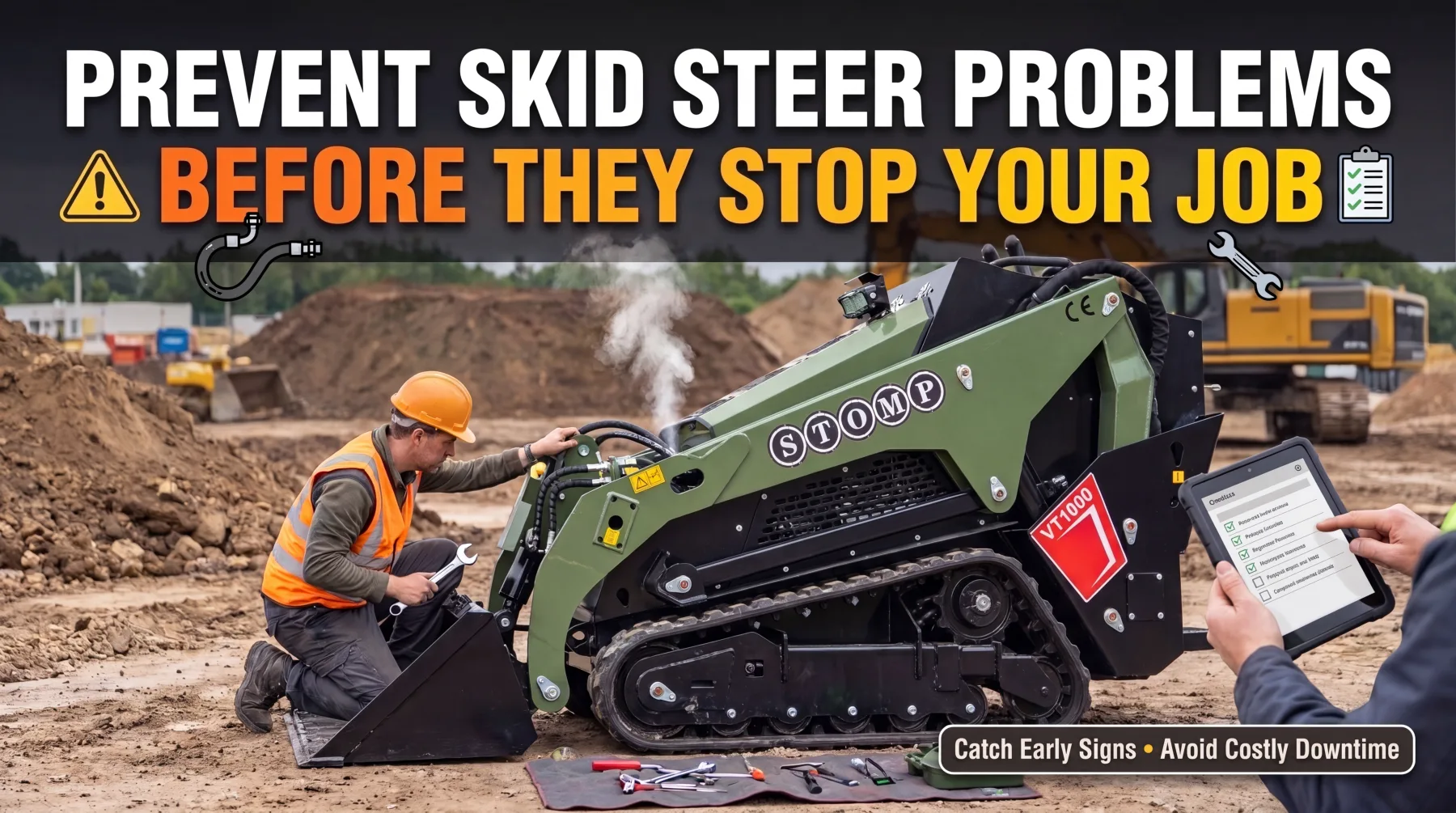
The most costly breakdowns during peak season are usually the ones that gave warning signs first. Your skid steer rarely fails without hinting at trouble beforehand, and learning to recognize those early signals lets you act while a repair is still small and manageable.
Catching a problem in its early stages keeps you in control of the timing, so you can address it on your schedule rather than losing a full day when the machine quits in the middle of a job.
Train yourself and your operators to stay alert to the common warning signs that trouble is developing:
- Unusual noises: Knocking, grinding, or whining can point to worn bearings, low fluid, or a component under strain.
- Slow or weak hydraulics: Poor lift, tilt, or response may signal low fluid, a failing pump, or a system restriction.
- Overheating: High operating temperatures can indicate a clogged radiator, low coolant, or an overworked engine.
- Visible leaks: Oil or hydraulic fluid around hoses, fittings, or cylinders should be investigated immediately.
- Reduced machine power: Sluggish acceleration or poor attachment performance may indicate engine, fuel, air, or hydraulic issues.
When you notice any of these symptoms, stop and investigate rather than pushing the machine to finish the task. A quick check of fluid levels, a look at the radiator screen, or a hydraulic inspection can reveal the cause before it escalates.
During peak season, the temptation to keep working through a minor issue is strong, but that shortcut often leads to the exact breakdown you were trying to avoid. By treating early warning signs as opportunities to prevent bigger failures, you keep your skid steer running dependably and spare yourself the expense and downtime that come with major repairs during your busiest weeks.
Train Operators for Safe and Productive Operation
Your skid steer is only as reliable as the person in the seat. Even a perfectly maintained machine will suffer if operators use poor technique, so proper training is one of the most effective ways to protect your equipment and your productivity during peak workloads.
Skilled operators reduce machine wear, work more efficiently, and avoid the mistakes that lead to costly damage. This makes training an investment that pays off across every hour of the busy season.
Good operating technique starts with respecting the machine's limits and moving with control. Operators should avoid overloading the bucket or attachment beyond the rated capacity because pushing past those limits strains the hydraulics, stresses the frame, and shortens the life of the equipment.
Smooth, deliberate control inputs matter too. Slamming into piles, jerking the controls, or traveling too fast over rough ground all accelerate wear and raise the risk of an accident. Teaching operators to keep the load low while traveling and to approach tasks with steady, measured movements protects both the machine and the people around it.
Efficiency on the job site follows naturally from sound technique. Operators who plan their movements, minimize unnecessary passes, and position the machine thoughtfully get more done with less fuel and less strain on the equipment.
Safety and productivity reinforce each other because the same careful habits that prevent accidents also reduce the wear that leads to breakdowns. When you make operator training a priority before peak season begins, you build a crew that treats the equipment well, works efficiently under pressure, and keeps your skid steer performing reliably when the workload is at its heaviest.
Create a Regular Maintenance Schedule for Peak Season
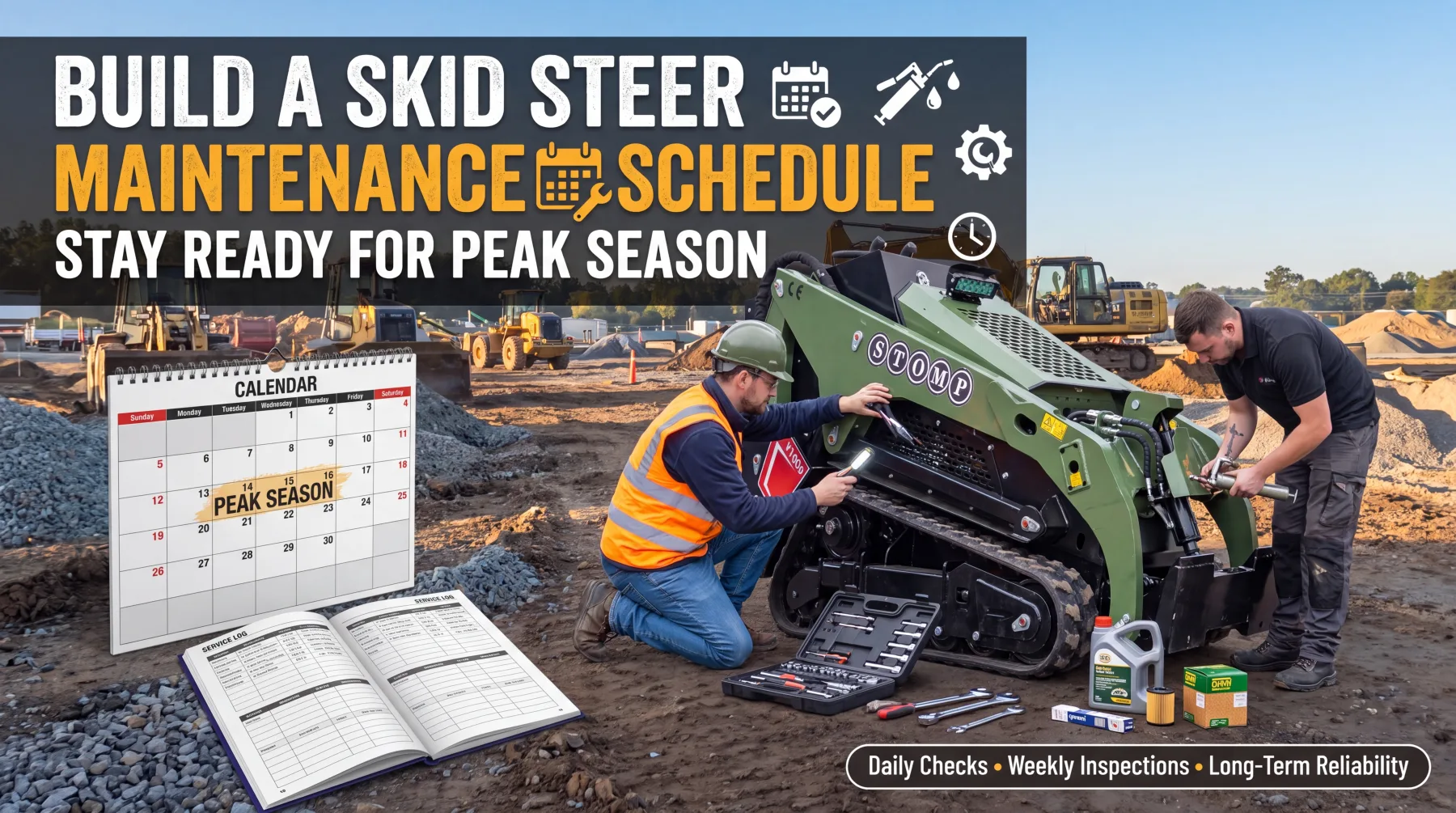
All the preparation in the world means little without a plan to sustain it. A regular maintenance schedule is what keeps your skid steer reliable through weeks of continuous operation, turning one-time preparation into ongoing protection.
During peak season, when the machine works longer and harder than usual, a consistent inspection and service routine is your best defense against the unexpected downtime that derails projects and drains profits.
Build your schedule around the intervals that match how hard the machine is working:
- Daily: Check fluid levels, inspect for leaks, clean the radiator screen, grease pivot points, and walk around the machine looking for visible damage.
- Weekly: Inspect hydraulic hoses and fittings, check tire or track condition, test attachment couplers, and confirm all safety systems function.
- Scheduled service: Follow the manufacturer's hour-based intervals for oil changes, filter replacements, and major system inspections.
The key to making a schedule work is consistency, especially when the pressure to keep working is at its peak. It is tempting to skip a daily check to squeeze in another load, but those skipped steps are exactly how small issues grow into breakdowns.
Assign clear responsibility for each task, keep a simple log so nothing slips through the cracks, and treat the routine as a non-negotiable part of the workday.
When you commit to steady, disciplined maintenance throughout the busy stretch, your skid steer stays ready for continuous operation and delivers the dependable performance your schedule depends on.
Conclusion
Preparing your skid steer for peak workloads comes down to a series of deliberate, connected steps rather than a single fix.
A thorough pre-season inspection gives you a healthy machine to start with, while optimizing attachments and operating habits keeps it running efficiently through demanding work. Staying alert to early warning signs helps prevent costly failures, and well-trained operators protect the equipment while keeping the job site productive.
Tying everything together with a consistent maintenance schedule ensures the machine holds up through weeks of continuous work. Each step reinforces the others, and together they keep your skid steer dependable when it matters most.
Put this preparation in place before the busy season begins, and contact your dealer or service provider to schedule any inspections or secure the parts you need.