Fix It Before It Breaks: 5 Skid Steer Parts You Must Check Every Month
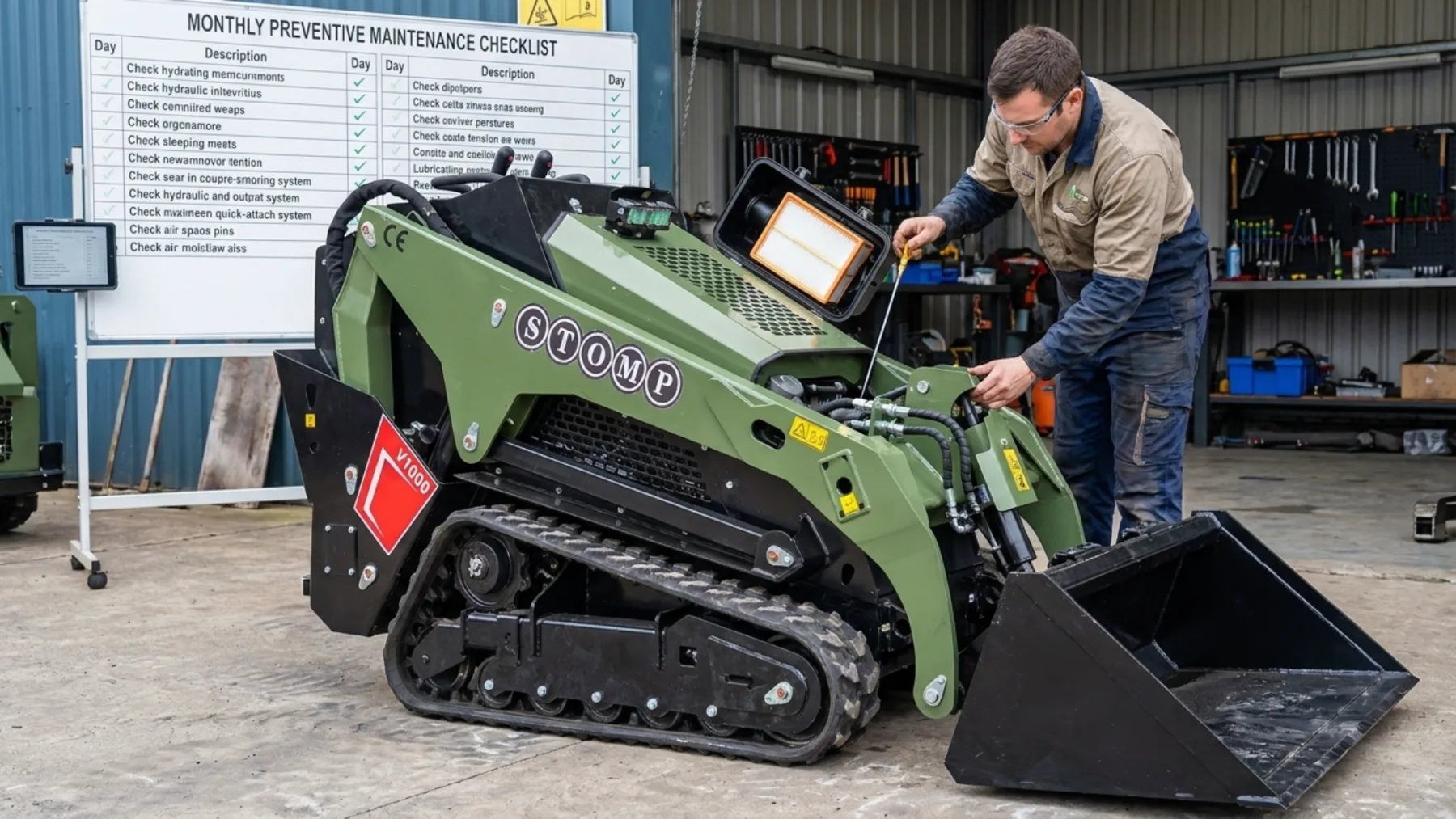
A skid steer that quits in the middle of a job costs you far more than just a repair bill. It stalls your entire crew, destroys your project schedule, and leaves a client waiting while you scramble for parts and emergency services.
The most frustrating part is that most expensive breakdowns are preventable. The small mechanical issues that eventually stop a machine usually show visible warning signs weeks before they fail. A quick monthly inspection can help you catch those red flags early and fix them before they become serious problems.
By setting aside time once a month to look over your machine, you stop reacting to failures and start managing your equipment health. This proactive habit turns minor adjustments into simple maintenance tasks and helps you avoid the stress of unplanned downtime.
Spending a few minutes checking critical systems helps your skid steer stay reliable, productive, and ready for the next job. When you catch a part while it is still wearing down, you can replace it on your schedule instead of waiting until the machine forces you to stop.
Need reliable skid steer equipment or support? Request a quote or Visit TYPHON.
1. Your Tires or Rubber Tracks
Whatever your machine rolls on takes a beating every single shift. Tires and tracks grind against rough surfaces, sharp debris, and abrasive ground all day long, and that damage adds up fast.
A failure here can leave you stranded right in the middle of a job, so this is where your monthly check should start. Walk around the machine and look closely at what is carrying it.
On tires, watch for deep cuts, bald spots, and chunks of missing rubber that could signal a blowout waiting to happen. On rubber tracks, look for deep cracks, exposed metal or fabric cords, and tracks that hang too loose or sag significantly off the rollers.
A small tear today is the exact spot that can split wide open under a heavy load next week. Catching it early helps stop a minor issue from becoming a complete track or tire failure.
Proper tension is just as important as physical condition. Check your track tension against the specifications in your operator manual. A track that is too loose can derail, while one that is too tight wears out early and puts extra strain on undercarriage components.
For wheeled machines, inspect tire pressure regularly. Uneven or low pressure causes premature wear and forces the machine to work harder than necessary, which can also burn extra fuel.
Finally, clear out packed debris. Rocks and hardened mud lodged in tracks can speed up wear and eventually damage drive components. By making this walkaround a monthly habit, you help keep your ground contact system reliable.
2. The Hydraulic Hoses
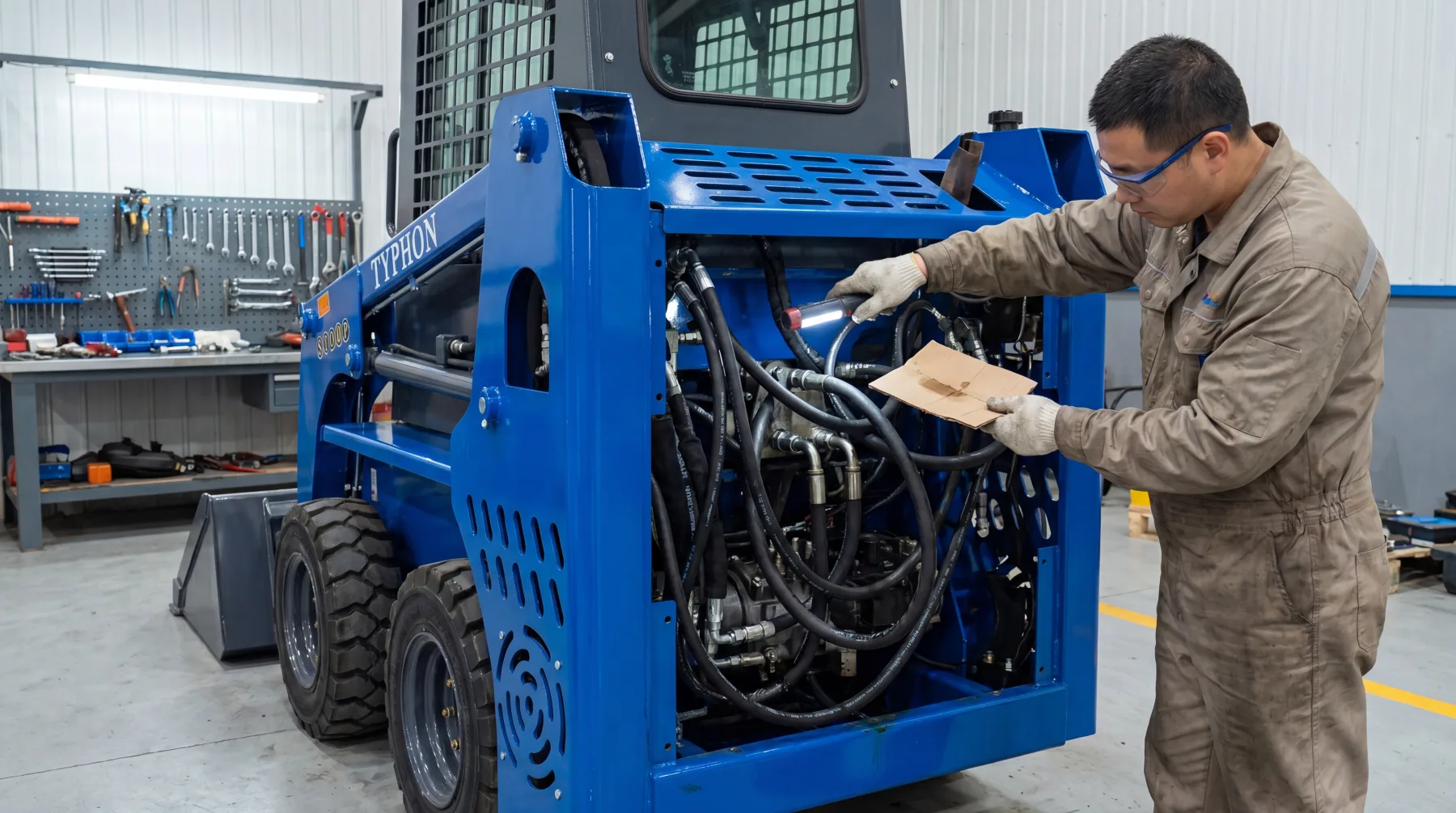
The hydraulic system is the muscle of your skid steer, and the hoses carry that power everywhere it needs to go. When a hose fails, the machine stops, hot fluid can spray out, and you are left with an expensive cleanup and repair.
These failures are messy, costly, and often avoidable with simple inspection.
Take a few minutes to trace every black rubber hose on the machine. Look for fluid leaks, weeping fittings, cracks in the outer rubber, and soft or bulging spots that may indicate internal failure.
Pay special attention to any area where a hose rubs against metal. Constant friction wears through the outer layer until the hose eventually blows. Damp or oily residue is an early warning sign that a leak is already forming.
Never check hydraulic leaks with your bare hands. Pressurized hydraulic fluid can inject through skin and cause serious injury. Use cardboard or another safe method to spot leaks.
If you find a hose touching metal, reroute it or add a protective sleeve before vibration wears through it. Also check the fittings, because many leaks start at connection points. Make sure every fitting is clean, tight, and free of moisture.
If a fitting shows a persistent drip, tighten it or replace the seal before the leak becomes worse. By inspecting hydraulic lines every month, you help prevent costly hydraulic failures and keep the machine working smoothly.
3. The Bucket Edge and Teeth
The bucket does the dirty work, and the front edge takes the most abuse. Every dig, scrape, and load wears down the cutting edge and teeth over time.
If you let that wear go too far, you are not just losing efficiency. You may also damage the bucket shell itself, which can lead to a much bigger repair cost.
Look at the front of your bucket and check the cutting edge carefully. If the metal is worn flat or rounded, it will not bite into material the way it should. That forces the hydraulics to work harder to penetrate the ground.
Next, count the teeth and check for any that are missing, broken, or worn down to stubs. A worn edge makes the machine work harder for less results, and a missing tooth puts extra strain on the teeth beside it.
Replacing bolt-on edges early is one of the most cost-effective maintenance habits you can build. A bolt-on cutting edge is usually much cheaper and easier to replace than the full bucket shell.
Keep spare teeth available whenever possible. They are simple to replace and help keep your digging performance sharp. Also watch for uneven wear across the edge, because lopsided wear may point to an operating habit or alignment issue that needs attention.
By keeping your bucket edge and teeth in good condition, you maintain better productivity and avoid expensive bucket damage.
4. The Pins and Bushings
The pins and bushings are the joints that connect your loader arms and bucket. They handle heavy stress every time you lift, tilt, or dump.
When they wear out or run dry, metal starts grinding against metal. That damage can quickly spread into the arms and frame, which can become one of the most expensive repairs on a skid steer.
Test these joints by wiggling the bucket and loader arms. If you feel excessive play, looseness, or hear loud clanking and knocking, your pins and bushings may be wearing out.
Those sounds and movements mean the joints are no longer fitting tightly. The fix starts with proper lubrication.
Grease every fitting according to the manufacturer’s schedule. Use a grease gun on all zerk fittings so the joints stay protected and never run dry. Dry joints wear fast and can damage surrounding parts.
Listen closely while operating. Clanking, squealing, or grinding during normal use is a sign that you should inspect and grease the area immediately.
Replace worn pins early. A worn pin and bushing is much cheaper to replace than a damaged loader arm. By keeping joints tight and well-greased, you protect your machine’s structure and keep the controls smooth.
5. The Engine Air Filter
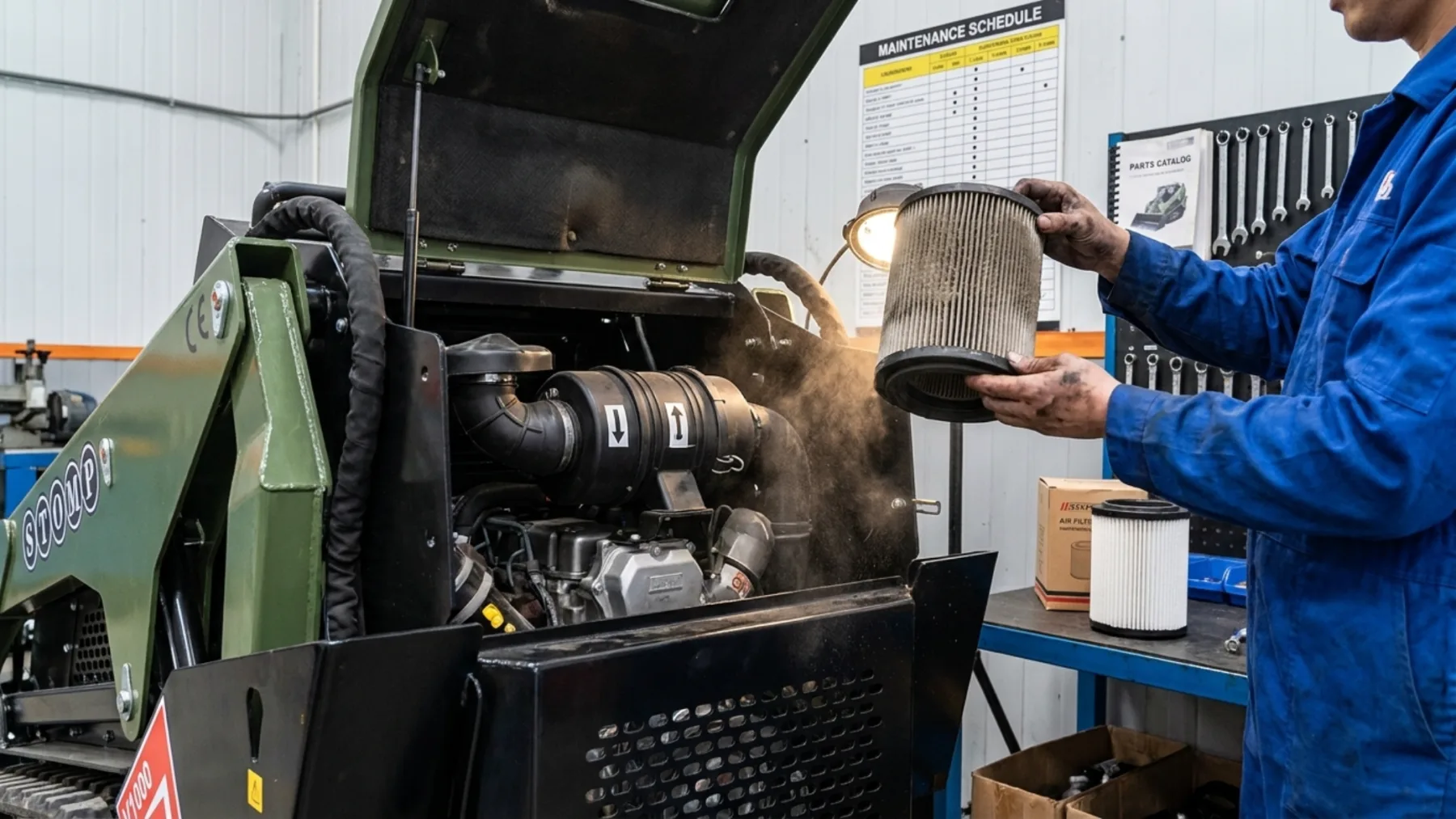
Your engine needs clean air to run properly, and the air filter is its main defense against dust, grit, and debris.
A clogged filter chokes the engine. A damaged filter allows abrasive dirt to enter the motor. Both problems can cause lost power, wasted fuel, and serious internal damage.
Open the engine compartment and pull the air filter for a visual inspection. Check whether it is packed with dirt, dust, or debris. Hold it up to a light source. If you cannot see light clearly through the filter element, it is time to clean or replace it.
Also inspect the filter for tears, damage, or bad seals. A damaged seal can allow unfiltered air to bypass the filter and enter the engine.
Check your air filter more often in dusty conditions. Demolition, dirt work, and dry jobsites can clog filters quickly, so weekly inspections may be necessary in harsh environments.
Do not over-clean a filter. Tapping out loose dust is fine, but aggressive cleaning can damage the paper element. When in doubt, replace it.
Keep a spare filter in the shop or service area. A backup filter helps prevent operators from running the machine too long with a clogged or damaged filter.
A clean air filter helps your engine breathe properly, improves fuel efficiency, and protects the motor from damaging dust.
Conclusion
Unexpected breakdowns are expensive, disruptive, and often preventable. The five parts covered here — tires or tracks, hydraulic hoses, bucket edge and teeth, pins and bushings, and the engine air filter — are some of the most common sources of skid steer downtime.
Each one gives warning signs before it fails. A short monthly inspection is often enough to catch those signs early.
By making these checks part of your routine, you stop reacting to emergency repairs and start managing your equipment with control. Catching problems early allows you to schedule maintenance at a better time instead of letting a surprise failure stop the job.
This proactive approach helps reduce repair costs, protect your schedule, and keep your crew moving. When you maintain these critical components, your skid steer remains a reliable and productive asset for your business.
Do not wait for a part to break before you inspect it. Regular maintenance is one of the simplest ways to protect your budget and keep your machine ready for real work.
For skid steer machines, parts, and equipment support, Request a quote or Visit TYPHON.